
Heat styling is one of those beauty habits that can make a noticeable difference in minutes. A blow dryer can add volume, a straightener can create a sleek finish, and a curling tool can completely change the shape of your hairstyle.
The problem isn’t necessarily using these tools. The bigger issue is how often you use them, how much heat you apply, and how you prepare your hair beforehand.
Excessive heat can contribute to dryness, roughness, frizz, and breakage. Dermatologists recommend limiting heat styling where possible, using lower heat settings and protecting the hair before styling.
The good news? You don’t have to completely give up your favorite styling tools.
A few smarter habits can help you enjoy styled hair while reducing unnecessary stress on your strands.
Why Does Heat Damage Hair?
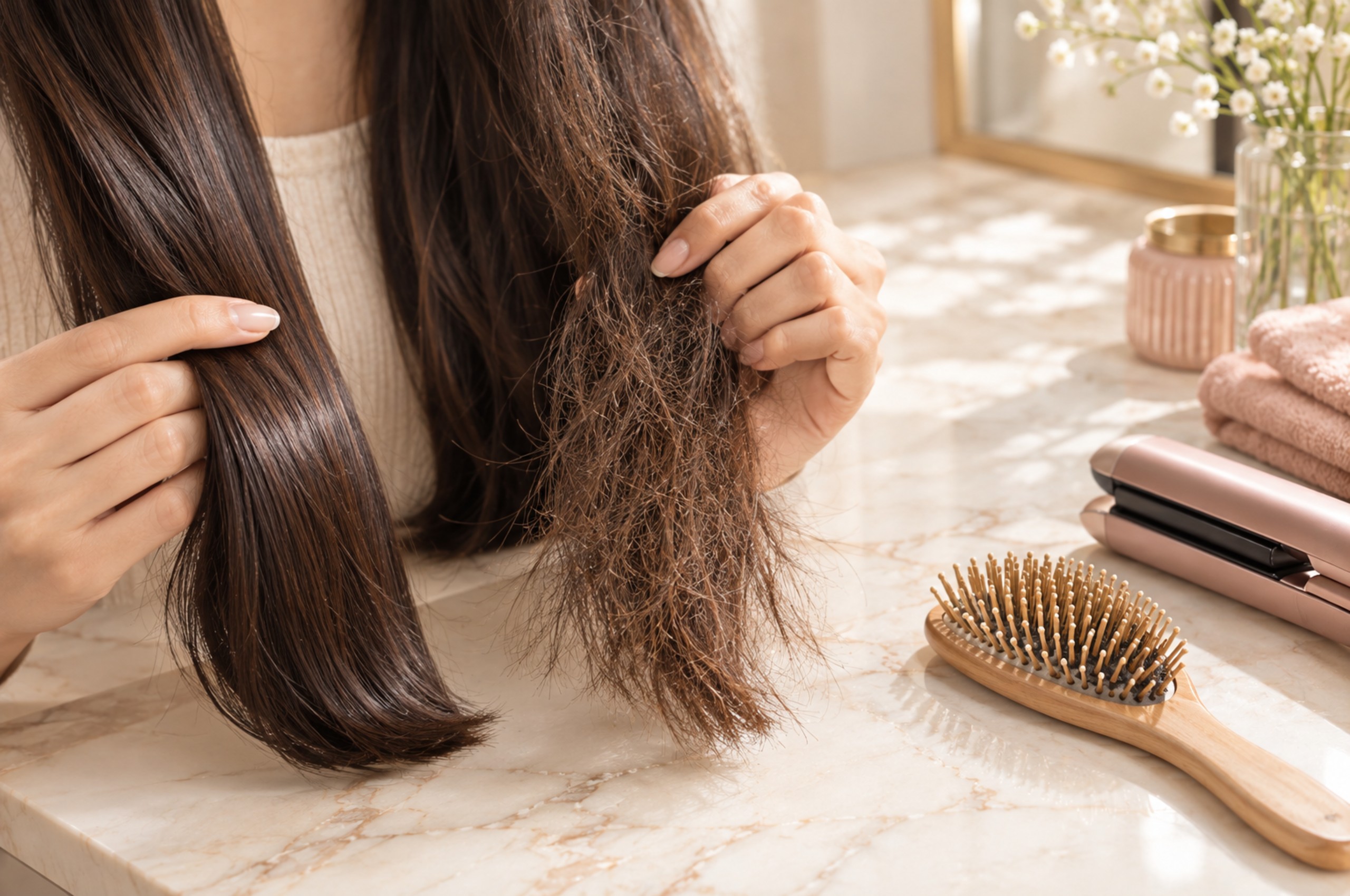
Your hair may look strong, but the outer surface of each strand can become damaged by repeated exposure to high temperatures.
Frequent heat can make hair feel:
- Dry and rough
- Less shiny
- Frizzy
- Brittle
- More prone to breakage
- Difficult to manage
Research on hair dryers has found that higher temperatures can increase surface damage, while repeated thermal stress can affect the structure and moisture characteristics of hair.
This is why more heat doesn’t necessarily mean better styling.
The goal should be to use the minimum amount of heat needed to achieve the hairstyle you want.
Start With the Right Hair-Drying Habit
One of the easiest ways to reduce heat exposure is to avoid using a blow dryer on soaking-wet hair for longer than necessary.
After washing your hair, gently remove excess water with a towel instead of aggressively rubbing your hair.
Let your hair partially air-dry before using the blow dryer whenever possible.
The American Academy of Dermatology also recommends allowing hair to partially air-dry and reducing how frequently you blow-dry it.
A simple routine:
Wash → gently remove excess water → allow some air-drying → apply heat protection → style.
This can reduce the amount of time your hair spends under direct heat.
Use a Heat Protectant Before Styling
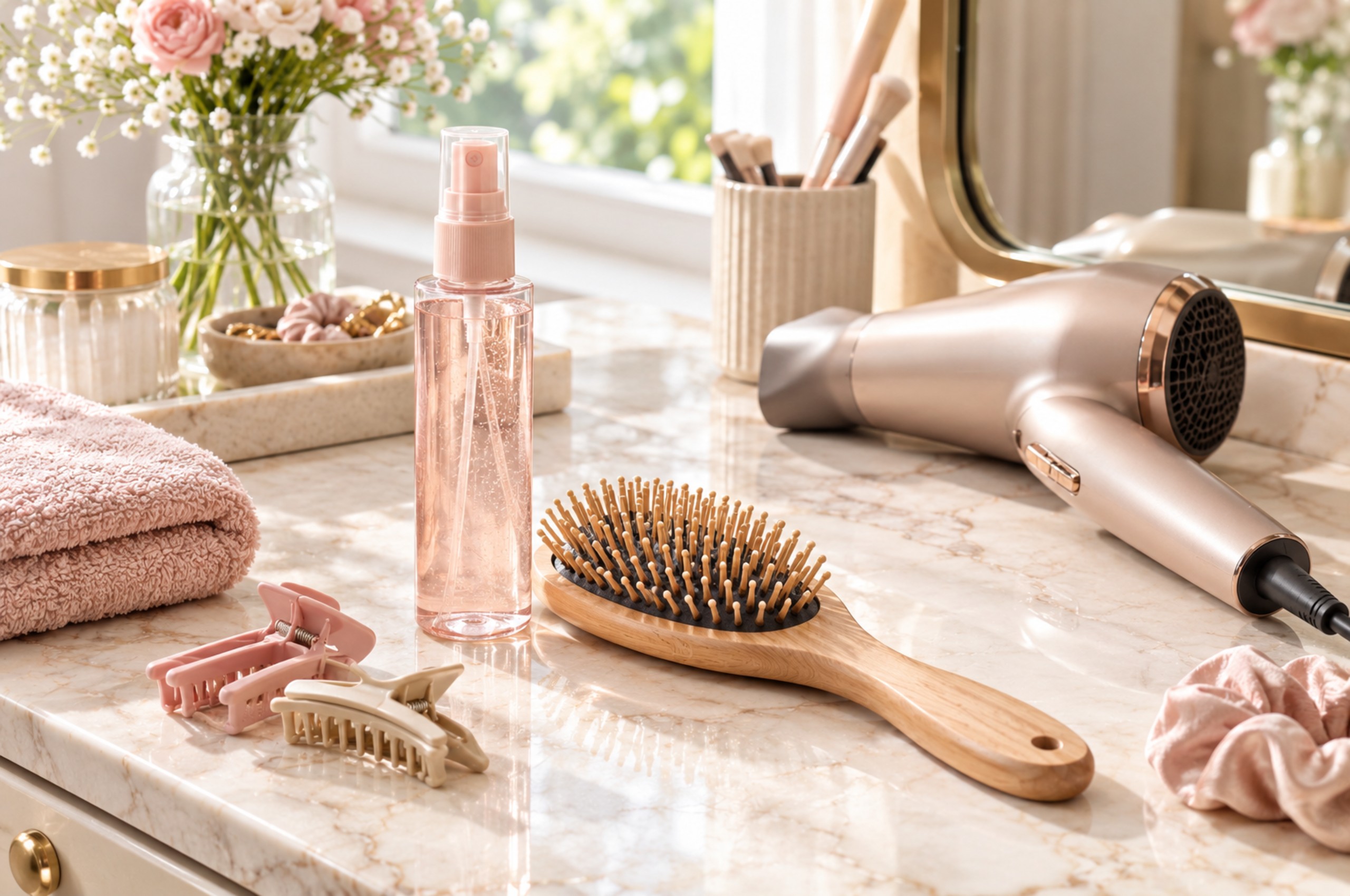
If heat styling is part of your regular routine, a heat-protection product can be a useful step.
Apply it according to the product instructions and distribute it through the areas that will be exposed to heat.
Think of it as preparing your hair before styling rather than trying to repair damage afterward.
A heat protectant cannot make unlimited high heat safe, though. It’s still important to control the temperature and frequency of styling.
Lower the Temperature Instead of Turning It Up
A common mistake is assuming that the hottest setting will give a smoother or faster result.
It may style your hair quickly, but excessive heat can increase damage.
The AAD recommends using low or medium heat where possible and limiting the use of hot styling tools.
Try starting with a lower setting and increase it only if necessary.
Your ideal temperature can depend on your hair’s texture, thickness, and condition, so there isn’t one universal temperature that works for everyone.
Never Use a Flat Iron on Wet Hair
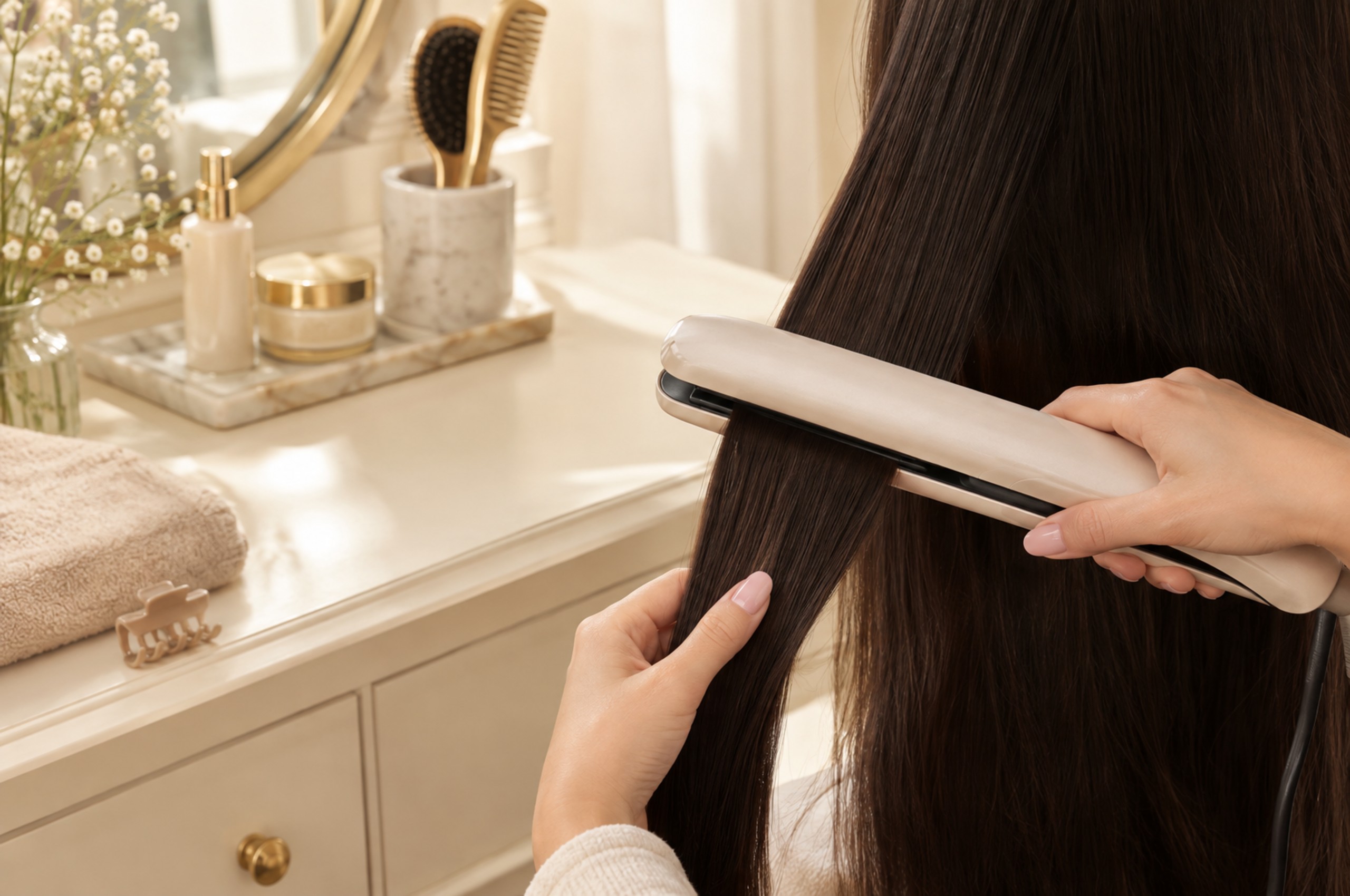
This is especially important.
Your hair should be completely dry before using a flat iron unless the specific tool is explicitly designed and approved for wet-to-dry use.
Wet hair is more vulnerable to damage, and very high heat can cause serious thermal stress to the hair shaft. A published case report described thermal injury after hot ironing was used on wet hair.
So before straightening:
Wash → dry thoroughly → heat protect → straighten.
Don’t rush this step.
Give Your Hair Some Heat-Free Days

You don’t have to style your hair with heat every time you wash it.
Some days can simply be:
- Air-dried hair
- A loose braid
- A soft bun
- A ponytail without tight pulling
- Your natural texture
Giving your hair breaks from frequent heat styling can reduce cumulative exposure.
The AAD specifically recommends limiting the frequency of blow dryers, flat irons, and curling irons.
Internal Link #1—add here
At the end of this paragraph, link the words:
“dry and frizzy hair”
to your existing blog:
Why Is Your Hair Getting Dry and Frizzy? Common Causes and What to Do
This is a very natural internal link because the reader is already thinking about dryness and frizz.
Be Gentle With Your Hair After Washing
Heat isn’t the only thing that can stress your hair.
Rough towel drying, aggressive brushing, and unnecessary pulling can also contribute to breakage.
Instead, gently squeeze excess water from your hair and use a towel or T-shirt to absorb moisture.
When detangling, start from the ends and gradually work upward.
For straight hair, allowing it to dry somewhat before gentle combing can help minimize unnecessary breakage. For tightly curled or textured hair, the appropriate detangling timing can be different.
Your Hair Type Matters
Not everyone’s hair responds to heat in the same way.
Fine Hair
Fine hair can be more vulnerable to excessive heat, so start with a lower setting and avoid repeatedly passing the tool over the same section.
Thick Hair
Thicker hair may require more time to style. Instead of immediately choosing maximum heat, divide the hair into manageable sections and work slowly.
Curly or Wavy Hair
If you want to preserve your natural texture, you may not need high heat at all. A diffuser on an appropriate setting or air-drying can be a gentler option.
Dry or Chemically Treated Hair
If your hair is already dry, bleached, colored, or chemically treated, be especially cautious with frequent heat styling.
If your hair is becoming increasingly brittle or you’re experiencing noticeable hair loss, consider speaking with a dermatologist rather than trying to solve the problem only with styling products.
Don't Keep the Heat Tool in One Place
When using a blow dryer, keep it moving rather than concentrating hot air on one small section for too long.
For curling irons and similar tools, avoid holding the hair against the hot surface longer than necessary.
The AAD recommends limiting the time hot tools remain in contact with hair.
The idea is simple:
Controlled heat + shorter exposure = a smarter styling routine.
Create a Lower-Heat Styling Routine
If you style your hair several times a week, try this approach:
Step 1: Wash and condition your hair gently.
Step 2: Remove excess water without rubbing aggressively.
Step 3: Let your hair partially air-dry when possible.
Step 4: Apply your heat-protection product according to its instructions.
Step 5: Use the lowest or moderate heat setting that gives you the result you need.
Step 6: Work in sections instead of repeatedly passing over the same area.
Step 7: Give your hair heat-free days whenever possible.
This approach doesn’t mean giving up styling. It simply makes your routine more intentional.
What About Hair Serum?
A hair serum can help improve the appearance of frizz and make hair feel smoother, depending on the product and formula.
But don’t assume that every serum is automatically a heat protectant.
Check the product label.
If you want heat protection, choose a product specifically formulated and labeled for that purpose.
Internal Link #2—add here
After the sentence above, link:
“hair serum”
to your existing blog:
Hair Oil, Hair Serum, or Hair Mask: What Does Your Hair Actually Need?
This gives readers a natural next step if they’re confused about which hair product they actually need.
How Often Should You Heat Style?
There isn’t one perfect number of heat-styling sessions that works for every person.
Your hair’s condition, texture, chemical treatments, tool temperature, and styling technique all matter.
Instead of focusing only on a number, pay attention to what your hair is telling you.
If you notice increasing dryness, roughness, split ends, or breakage, consider reducing heat exposure and changing your routine.
The AAD recommends limiting heat styling and using lower heat settings to help reduce damage.
Internal Link #3—add here
Link the words:
“How often do you wash your hair?”
to your existing blog:
How Often Should You Actually Wash Your Hair? A Simple Guide by Hair Type
Signs Your Hair May Need a Heat Break
Your hair may benefit from less heat styling if you notice:
- More split ends than usual
- Persistent dryness
- Increased frizz
- Rough texture
- Frequent breakage
- Loss of shine
- Hair that feels unusually weak
These signs don’t automatically mean heat is the only cause. Hair condition can be affected by many factors, including chemical treatments, friction, environmental exposure, and underlying scalp or hair conditions.
If you’re experiencing significant or ongoing hair loss, it’s better to get professional advice.

Final Thoughts
You don’t need to completely stop using a blow dryer, straightener, or curling tool to take better care of your hair.
The smarter approach is to reduce unnecessary heat, avoid excessive temperatures, protect your hair before styling, and give your strands regular breaks.
Beautiful styling and healthy-looking hair don’t have to be opposites.
Sometimes, the biggest improvement comes from simply turning the temperature down, styling less often, and letting your natural hair have a little more time to breathe.
Your hair doesn’t need more heat. It needs a smarter routine.