
Have you ever washed your face at night and still seen a faint trace of makeup on your cotton pad the next morning? Your cleanser probably isn’t finishing the job. This is exactly the gap double cleansing is designed to close.
It sounds like an extra, time-consuming step. But done right, it takes less than two minutes and can noticeably change how your skin looks and feels—less congestion, fewer breakouts, and a cleaner base for everything you apply next.
What Double Cleansing Actually Means
Double cleansing is simply washing your face twice, using two different types of cleansers, back to back. The first step uses an oil-based cleanser to dissolve makeup, sunscreen, and the natural oil (sebum) your skin produces throughout the day. The second step uses a water-based cleanser, your regular face wash, to clean away sweat and dirt. It also removes any residue left behind from the oil cleanser.
The idea is simple: oil dissolves oil-based buildup like SPF and makeup far more effectively than a water-based cleanser can. A water-based cleanser then handles everything else. Together, they cover more ground than either step alone.
Why One Cleanse Often Isn't Enough
Most face washes are formulated to clean skin, not to break down makeup or heavy sunscreen. When you rely on a single cleanse after wearing SPF or makeup, some product usually stays behind. It sits in pores, mixes with sweat and oil, and contributes to clogged pores or dull skin over time.
This matters even more if you deal with frequent breakouts. Leftover sunscreen and oil are common, often-overlooked triggers for clogged pores.
Who Should Try Double Cleansing
Double cleansing isn’t only for people who wear heavy makeup. It’s genuinely useful for anyone who wears sunscreen daily, which should be everyone. It also helps if you live in a humid or polluted city, have oily or acne-prone skin, or wear any makeup—even just tinted moisturizer or concealer.
If your skin is very dry or sensitive, you can still double cleanse. Just choose a gentle, non-stripping oil cleanser, and skip it on days your skin feels irritated or tight.
How to Double Cleanse, Step by Step
Step 1: Apply the oil cleanser to dry skin. Take a small amount and massage it gently over your dry face for about a minute. Focus on areas with makeup or SPF, like your cheeks, forehead, and jawline. You’ll notice makeup and product starting to dissolve and move more easily across your skin.
Step 2: Rinse or emulsify. Add a little water and continue massaging until the oil turns milky, then rinse thoroughly with lukewarm water.
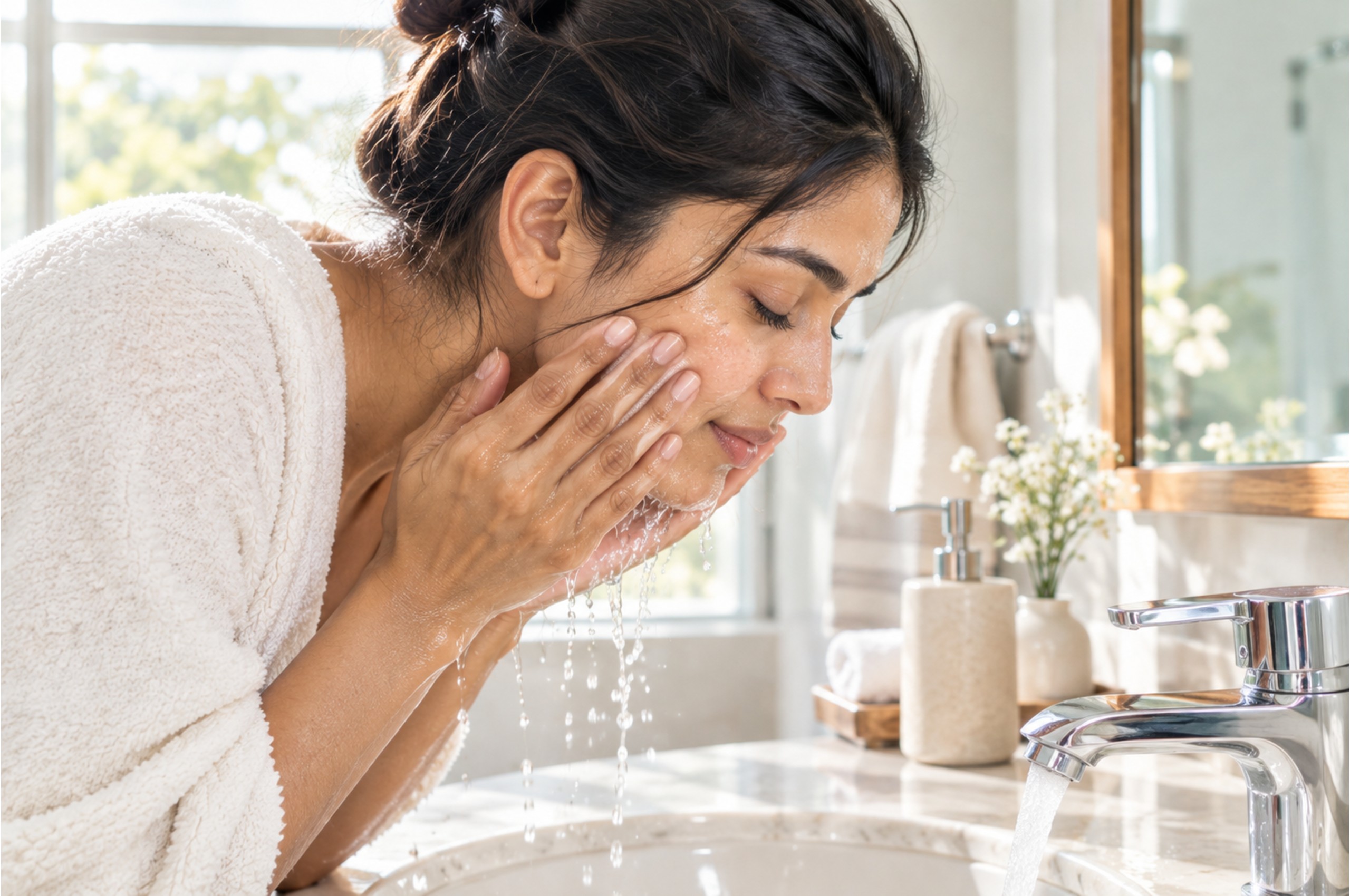
Step 3: Follow with your regular face wash. Apply your normal water-based cleanser and wash as usual, using gentle circular motions for 30-60 seconds before rinsing.
Step 4: Pat dry and continue your routine. Once your skin is clean, move on to your regular toner, serum, and moisturizer as usual.
Choosing the Right Cleansers
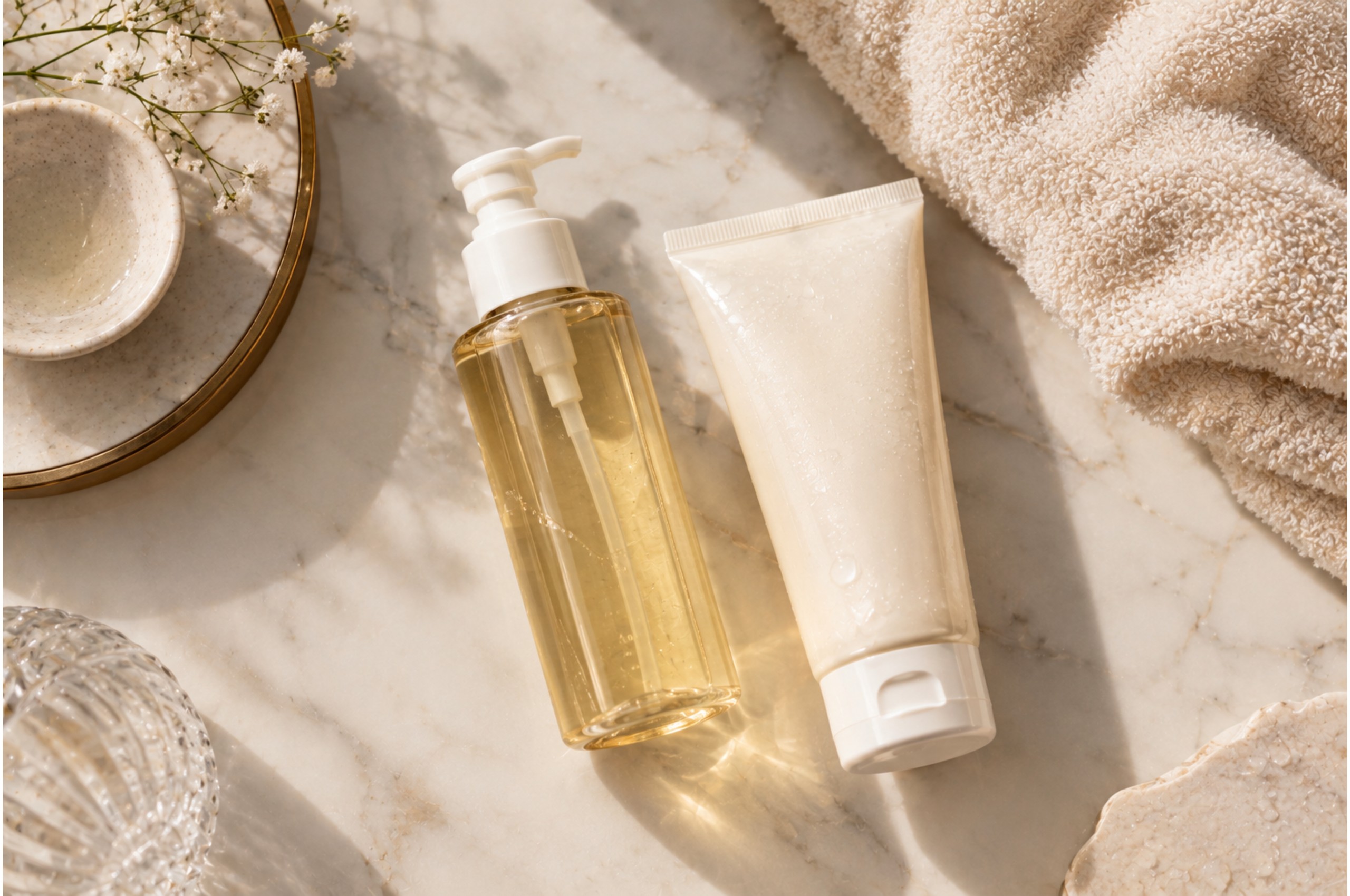
For the oil step, look for a lightweight cleansing oil or balm that rinses off without leaving a greasy film. This matters most for oily and combination skin. For the second step, stick with a gentle, low-foam face wash. Avoid anything that leaves your skin feeling tight or squeaky-clean, since that’s usually a sign it’s stripping your skin barrier.
If you’re building your routine around your skin type, it’s worth revisiting how the rest of your steps fit together. Your complete oily skin routine can guide you on what to layer on after cleansing, morning and night.
Recommended Product: A lightweight cleansing oil—Check Price
Recommended Product: A gentle, low-foam face wash—Check Price
Common Double Cleansing Mistakes to Avoid
Skipping the oil step on makeup-free days isn’t necessary. But skipping it on SPF days often leaves residue behind, even if you can’t see it. Another common mistake is over-cleansing. Double cleansing is generally a nighttime step, not something you need to repeat in the morning, when your skin mostly needs a light rinse. Scrubbing too hard during either step can also irritate your skin barrier. Keep your movements light and let the cleanser do the work.
It also helps to know what not to do around cleansing in general. These often overlap with the everyday skincare mistakes that quietly work against clear, healthy skin.
Frequently Asked Questions
Do I need to double cleanse every day?
Not necessarily every morning. But most people benefit from double cleansing every night, especially if you’ve worn sunscreen or makeup during the day.
Can double cleansing cause breakouts?
Done correctly, it usually reduces breakouts by removing residue that clogs pores. Breakouts are more likely if the oil cleanser isn’t rinsed off completely or if it’s too heavy for your skin type.
Is double cleansing suitable for oily skin?
Yes—oily and acne-prone skin often benefits the most. It helps remove excess sebum along with makeup and SPF, without over-stripping the skin when done with the right products.
What if I don’t wear makeup or sunscreen?
You can still double cleanse, but it’s less essential. A single gentle cleanse is usually enough on days with no SPF or makeup.
Final Thoughts
Double cleansing isn’t about adding complexity to your routine. It’s about actually finishing what a single cleanse often leaves behind. Once it becomes a habit, it takes barely any extra time. The difference shows up in fewer clogged pores, better product absorption, and skin that genuinely feels clean, not just rinsed.